 Quote
Quote
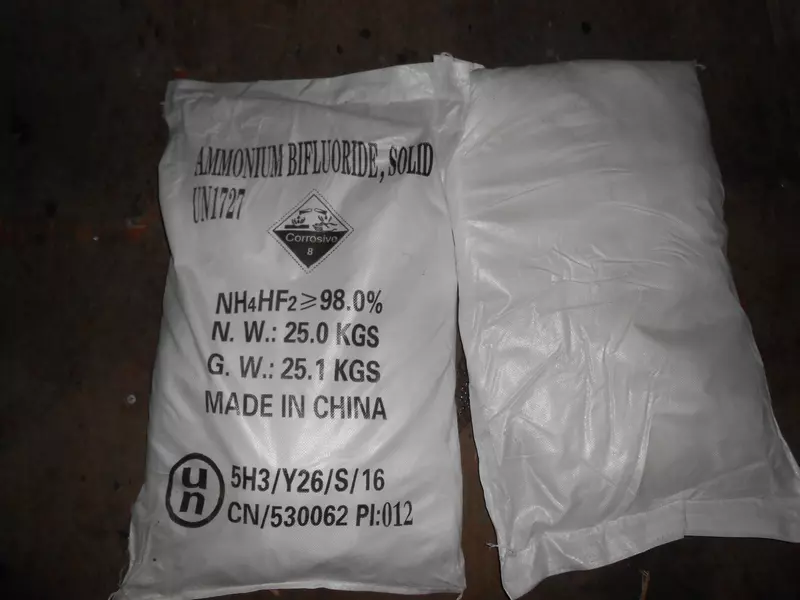


Ammonium bifluoride is a solid acid salt with the molecular formula NH₄HF₂, sometimes written NH₄HF₂ or (NH₄)(HF₂). Structurally, it is a 1:1 pairing of an ammonium cation (NH₄⁺) with a bifluoride anion (HF₂⁻) — a symmetric, strongly hydrogen-bonded pair of fluoride ions sharing a single proton. It is one of the most stable bifluoride salts known and is also one of the few solid commercial sources of latent hydrofluoric acid chemistry.
Applications
| Aluminum Brightening
Truck wheels, fleet trailers, food-service equipment
0.5–2% working solution. ABF strips the dull aluminum-oxide skin off polished and unpolished aluminum, exposing fresh mirror-bright metal. The dominant fleet detail shop application. |
Masonry & Concrete Cleaning
Efflorescence, mortar haze, calcium scale
Diluted working solution dissolves calcium carbonate efflorescence and mortar smears off brick, stone, and tile. The “HF alternative” specified by masonry contractors who cannot store liquid HF on site. |
| Stainless Steel Surface Prep
Acid descaling, passivation prep, oxide scale removal
Combined with nitric or sulfuric acid in descaling baths, ABF accelerates removal of oxide scale and chrome-depleted layers from welded stainless. A standard ingredient in descaling pastes used after stainless welding. |
Beverage & Brewery Line Wash
Dilute solutions are used in some food-contact equipment lines as a low-foam mineral scale remover. |
Storage & Incompatibilities
|
How do you safely store, handle, and dispose of ammonium bifluoride? Ammonium bifluoride is GHS Acute Toxicity Category 2 (oral), Acute Toxicity Category 3 (dermal and inhalation), Skin Corrosion Category 1B, and Eye Damage Category 1. The working solution generates real hydrofluoric acid in dilute form. Casual handling is unsafe; informed handling with the right PPE, the right containers, and on-site calcium gluconate is straightforward and is the same protocol used in every fleet detail shop and anodizing line in the country. . |
Storage & Incompatibilities Store ammonium bifluoride in its original sealed poly bag inside a closed HDPE or polypropylene bucket or drum, in a cool dry location away from direct sunlight. Do not store in glass — over time, even ambient humidity will allow the chemical to begin etching the glass container. Keep separated from strong bases (sodium hydroxide, ammonia), strong acids (concentrated sulfuric, nitric), and oxidizers (peroxides, chlorates). Compatible storage neighbors include other dry fluoride and acidic salts, surfactants, and inert mineral powders. |
Required PPE For Handling Solid Flakes
|
|
First Aid For Exposure
Skin exposure. Immediately flush with copious running water for at least 15 minutes. Apply calcium gluconate 2.5% topical gel and massage in. Seek emergency medical care — fluoride burns can cause systemic calcium and magnesium depletion delayed by hours. Tell the ER it is a fluoride exposure and bring the SDS.
Eye exposure. Rinse with copious water or normal saline for at least 30 minutes. Calcium gluconate eye rinse if available. Emergency care immediately.
Inhalation. Move to fresh air. If breathing is labored or respiratory irritation persists, seek medical care.
Ingestion. Do not induce vomiting. Give water or milk. Call Poison Control and seek emergency care.
| Weight | 25 kg |
|---|
Related products


Car Care

Automotive

Chemical

Agriculture

Cleaning Equipment

Automotive

Chemical